
The GENIUS Act framework explained
The GENIUS Act, enacted on July 18, 2025, marks a definitive shift from the unregulated issuance era to a federal licensing model for stablecoins. The legislation establishes a clear regulatory framework for payment stablecoin activities, treating Permitted Payment Stablecoin Issuers (PPSIs) as financial institutions under the Bank Secrecy Act. This change imposes strict anti-money laundering obligations and requires rigorous oversight of reserve assets.
Under this new regime, the issuance of stablecoins is no longer a free-for-all. Only entities that obtain federal permission can operate in this space. The law directs the Treasury Department to issue regulations that enforce these standards, ensuring that the backing assets—such as cash and short-term U.S. Treasuries—are held by custodians subject to regulatory oversight. This structure aims to protect consumers while integrating stablecoins into the formal financial system.
The framework applies to any digital asset designed to maintain a stable value relative to a fiat currency, primarily the U.S. dollar. By defining specific roles for issuers, reserve custodians, and payment processors, the GENIUS Act seeks to eliminate the opacity that previously characterized the stablecoin market. Compliance is now a prerequisite for market entry, fundamentally altering the competitive landscape for digital payment instruments.
Reserve requirements and transparency
Stablecoin regulations 2026 establish a rigid framework for reserve backing, demanding that issuers maintain a 1:1 ratio of high-quality liquid assets to circulating tokens. This requirement applies to every asset in the reserve, ensuring that the value of the stablecoin is always supported by tangible, readily convertible holdings. The rule is not a target; it is a hard constraint enforced at the end of each business day.
Transparency is the mechanism that makes these reserves credible. Issuers must provide regular, audited reports detailing the composition of their reserves. This moves the industry away from opaque trust models toward verifiable proof. Investors and regulators can now see exactly what backs the token, reducing the risk of sudden de-pegging events caused by hidden liabilities or risky investments.
The GENIUS Act further tightens this by restricting who can hold these reserves. Custodial and safekeeping services for payment stablecoins must be performed by entities under federal or state banking oversight. This effectively bars unregulated third parties from holding the assets, ensuring that the reserves are protected by established financial safety nets.

USDC and USDY: Navigating the 2026 Stablecoin Regulations
The GENIUS Act, signed into law on July 18, 2025, established a federal regulatory framework that fundamentally reshaped how stablecoins must be issued and backed. This legislation directs the Treasury to treat permitted payment stablecoin issuers (PPSIs) as financial institutions, imposing strict anti-money laundering obligations and requiring federal or state banking oversight for custodial services. Under these new stablecoin regulations 2026, the distinction between traditional fiat-backed models and tokenized real-world assets (RWA) has become a critical differentiator for market participants.
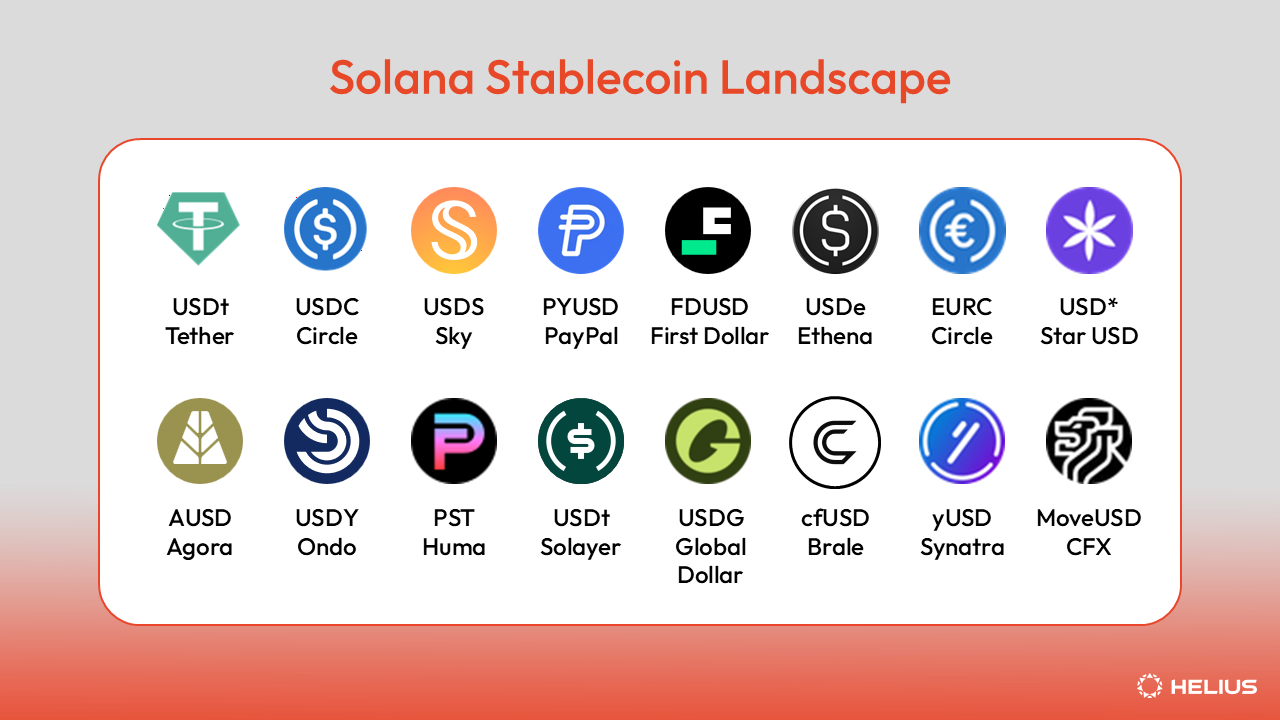
USDC, issued by Circle, operates as a traditional payment stablecoin backed primarily by short-term U.S. Treasuries and cash deposits. This structure aligns closely with the GENIUS Act’s requirement for high-quality liquid assets, ensuring immediate redeemability at par. Circle has leveraged this compliance to maintain its position as the dominant fiat-backed option, appealing to institutional users who prioritize regulatory clarity and transparent reserve attestations over yield generation.
In contrast, USDY, issued by Ondo Finance, represents a shift toward tokenized RWA notes. Rather than holding direct cash or Treasuries in a bank account, USDY is backed by tokenized notes that are themselves backed by U.S. Treasuries. This RWA-backed structure allows USDY to offer yield that accrues directly to holders, a feature that traditional fiat-backed stablecoins generally cannot distribute under current regulatory interpretations. The 2026 regulations have inadvertently highlighted this divergence, as RWA-backed models seek to fit within the broader securities and banking frameworks while offering superior economic utility.

The following comparison highlights how these two major players adapt to the new regulatory environment, focusing on reserve composition, yield mechanics, and compliance status.
| Feature | USDC | USDY |
|---|---|---|
| Reserve Assets | Cash and short-term U.S. Treasuries | Tokenized U.S. Treasury notes |
| Yield Distribution | No direct yield to holders | Yield accrues to token holders |
| Regulatory Status | PPSI (Payment Stablecoin Issuer) | RWA-backed note (Securities framework) |
| Primary Use Case | Payments and trading settlement | Yield-bearing treasury exposure |
| Custody Model | Bank deposits and Treasury bills | Tokenized notes via regulated issuers |
Institutional adoption and RWA tokenization
The passage of the GENIUS Act has triggered a structural shift in how institutional capital interacts with digital assets. By treating permitted payment stablecoin issuers (PPSIs) as regulated financial institutions under the Bank Secrecy Act, the legislation has removed the primary barrier to entry for traditional finance: regulatory uncertainty. This clarity has accelerated the tokenization of Real-World Assets (RWA), allowing institutions to move beyond speculative crypto trading into the settlement of tangible value.
RWA tokenization involves converting rights to an asset, such as US Treasury bills or private credit, into digital tokens on a blockchain. For institutions, this process offers two distinct advantages driven by the new regulatory framework. First, it provides a compliant on-ramp for stablecoin reserves. The GENIUS Act mandates that stablecoin issuers hold reserves in high-quality liquid assets, creating massive, sustained demand for tokenized US debt. Second, it enables 24/7 settlement, reducing the friction and counterparty risk inherent in traditional T+2 settlement cycles.
The market response has been immediate. Regulatory forecasts indicate that the upper bound for payment stablecoin issuance could reach $500 billion by 2026, a significant jump from $250 billion in 2025. This growth is not merely speculative; it is underpinned by the need for compliant, yield-bearing stablecoin reserves. As global rules reshape payments, institutions are increasingly viewing tokenized RWAs not as an experimental asset class, but as the foundational infrastructure for the next generation of financial settlement.
Key questions on stablecoin compliance
The GENIUS Act, enacted in July 2025, establishes the federal regulatory framework for payment stablecoins. It directs the Treasury and banking regulators to oversee issuers, ensuring that custodial services and reserve management meet strict financial standards. This legislation marks a shift from fragmented oversight to a unified federal approach for stablecoin regulations 2026.
What is the GENIUS Act 2026?
The GENIUS Act provides the legal basis for regulating payment stablecoins in the United States. It designates permitted payment stablecoin issuers (PPSIs) as financial institutions under the Bank Secrecy Act, imposing anti-money laundering obligations. Current rulemaking from the Treasury and OCC is focused on implementing these requirements, with comment periods and proposals shaping the final compliance landscape in 2026.
What is the new stablecoin legislation?
The new legislation requires that entities performing custodial or safekeeping services for stablecoin reserves be subject to federal or state banking oversight. This ensures that the assets backing stablecoins are held securely and transparently. The law aims to reduce systemic risk by aligning stablecoin operations with traditional banking safeguards, making compliance a prerequisite for market participation.
What is the best stablecoin in 2026?
Market leaders in 2026 include Tether (USDT) for its dominance in trading volume and USDC for its emphasis on safety and transparency. While USDT holds the largest market cap, USDC is often preferred by institutional investors seeking regulatory clarity. USD1 is also gaining traction as a growth-oriented option. The "best" choice depends on whether the priority is liquidity or regulatory compliance.

No comments yet. Be the first to share your thoughts!