
Stablecoins shift from trading assets to payment rails
For years, institutional interest in stablecoins focused on speculative trading and yield generation. In 2026, that dynamic is reversing. Enterprises are now treating stablecoins as operational infrastructure, prioritizing the speed, transparency, and cost-efficiency of cross-border payments over market speculation.
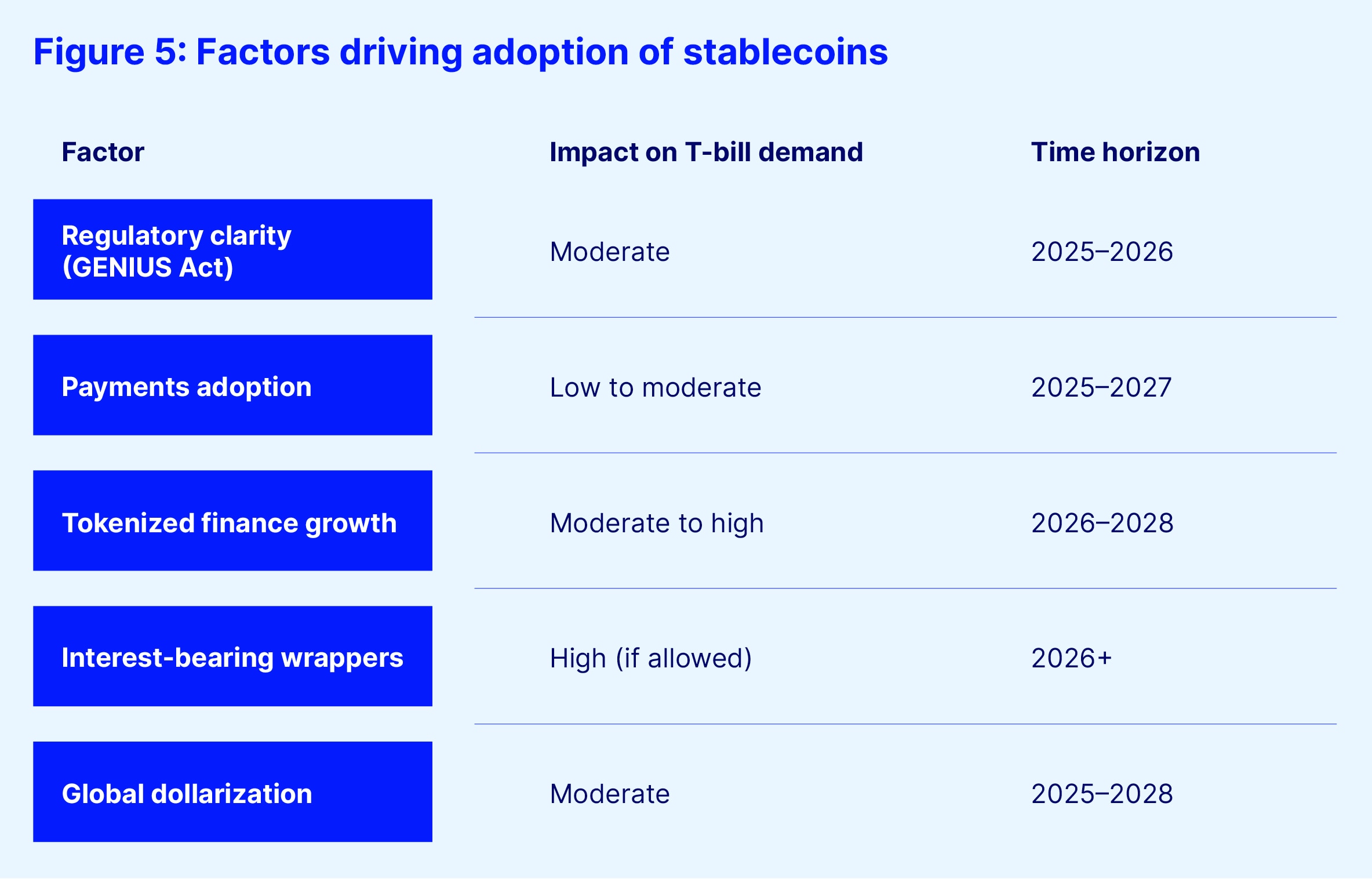
This transition is driven by regulatory clarity and the urgent need for better treasury management. As major payment processors debut stablecoin integration, the focus has shifted to building usable, predictable rails for business-to-business (B2B) transactions. The goal is no longer just holding digital dollars; it is moving them efficiently across borders.
The scale of this shift is significant. Industry analysis projects that stablecoins will represent approximately 3% of all US dollar payments in 2026, rising to 10% by 2031. This growth is not limited to crypto-native platforms but is embedded in traditional financial workflows.
To understand the current market momentum, we can look at the trading volume of major stablecoins like USDT and USDC. The following chart visualizes the volume trends over recent years, highlighting the steady increase in institutional participation and transaction volume.
The move toward regulated payments also involves yield-bearing stablecoins and tokenized treasuries. These instruments allow institutions to earn returns on idle cash while maintaining the liquidity required for daily operations. Europe is simultaneously building Euro stablecoin frameworks, creating a multi-currency infrastructure for global trade.
As regulation tightens and standards emerge, stablecoins are becoming a standard tool for corporate finance. The speculative edge is fading, replaced by the practical utility of instant settlement and reduced intermediary costs.
Cross-border payments drive enterprise adoption
Stablecoins are shifting from speculative assets to operational infrastructure for global business. In 2026, enterprises are prioritizing these digital rails because they solve the persistent friction in cross-border B2B payments. Traditional swift transfers often take days to settle, tying up working capital and obscuring the true cost of doing business. Stablecoins offer a direct alternative, moving value across borders in minutes rather than days.
The advantage lies in transparency and speed. A stablecoin payment settles on-chain, providing real-time confirmation to both sender and receiver. This reduces the need for reconciliation and eliminates the "black box" period where funds are in transit. For multinational companies, this means cash flow visibility that was previously impossible with legacy banking systems.
Cost and efficiency comparison
The financial impact of switching to stablecoin rails is measurable. While traditional wire transfers involve multiple intermediary banks, each taking a fee, stablecoin transactions typically involve only the network gas fee and the exchange spread. This structural difference significantly lowers the cost per transaction, especially for high-volume or smaller-value B2B payments.
| Feature | Traditional Wire Transfer | Stablecoin Payment |
|---|---|---|
| Settlement Time | 1-5 Business Days | Minutes (24/7) |
| Cost Structure | High (Intermediary fees) | Low (Network fee + spread) |
| Transparency | Low (Tracking gaps) | High (On-chain visibility) |
| Availability | Business Hours Only | 24/7 |
This efficiency is not just theoretical. As noted in recent industry analysis, 2026 marks a phase where stablecoins are becoming a usable, predictable rail for businesses that need speed and control. The move from theory to practice is driven by the clear economic incentive: lower costs and faster access to capital.
Institutional integration
Major financial institutions are now integrating stablecoin capabilities directly into their treasury management systems. This institutional adoption ensures that the underlying infrastructure is robust, compliant, and secure. Companies no longer need to manage private keys or interact with decentralized exchanges directly; they can use regulated custodians that mirror traditional banking safeguards.
The result is a hybrid financial landscape where fiat and digital dollars coexist. Enterprises can hold stablecoin balances for immediate cross-border needs while keeping their primary reserves in traditional accounts. This flexibility allows businesses to optimize their liquidity without taking on excessive regulatory risk.
The convergence of regulatory clarity and technological maturity is accelerating this shift. As more banks offer stablecoin services, the network effects will make traditional wires increasingly obsolete for urgent international payments. The future of cross-border commerce is not just faster; it is fundamentally more efficient.
Regulated stablecoins gain institutional trust
The crypto market is shedding its "wild west" reputation as regulatory frameworks harden into enforceable standards. For institutional capital, which demands auditability and legal clarity, this shift is the primary catalyst for adoption. The convergence of US legislative efforts, such as the GENIUS Act discussions, and the European Union's Markets in Crypto-Assets (MiCA) regulation, creates a defined "safe harbor" for compliant digital assets.
These frameworks mandate reserve transparency, segregation of customer funds, and regular attestation. This reduces the counterparty risk that previously kept banks and asset managers on the sidelines. As the legal environment stabilizes, issuance of compliant stablecoins is accelerating, driven by institutions seeking efficient settlement rails rather than speculative yield.
The impact is already visible in market projections. Industry analysis suggests stablecoins could represent 3% of all US dollar payments by 2026, scaling to 10% by 2031 as legacy payment rails struggle with speed and cost. This transition from niche trading pairs to mainstream payment infrastructure marks a fundamental change in how global liquidity moves.
RWA tokenization expands stablecoin utility
Stablecoins are moving beyond simple cross-border transfers to become the liquidity backbone for tokenized real-world assets (RWA). This shift connects the frictionless nature of digital currency with the tangible value of traditional finance, creating a new layer of institutional infrastructure.
At the center of this expansion are tokenized treasuries. By issuing U.S. government debt on-chain, institutions can settle transactions instantly while maintaining regulatory compliance. Stablecoins serve as the primary settlement asset in these environments, allowing for 24/7 liquidity without the delays of traditional banking rails. This integration transforms stablecoins from speculative instruments into essential operational tools for asset management.
The growth in this sector is accelerating. According to the Q1 2026 Global Crypto Adoption Index, EUR-denominated stablecoin volumes grew 12x from January to March 2026, reaching $777 million per month. While still a small fraction of total volume, this rapid expansion signals strong institutional interest in euro-linked digital assets as a bridge between traditional finance and blockchain networks.
This convergence creates a feedback loop. As more assets are tokenized, the demand for stable settlement layers increases. Conversely, as stablecoin adoption grows, it becomes easier to tokenize illiquid assets like real estate or private credit. The result is a more efficient market where capital moves faster, and barriers to entry lower for institutional participants.
However, this growth brings concentration risks. As noted by Stripe’s 2026 analysis, large-scale stablecoin adoption could shift deposits away from traditional banks, potentially concentrating reserves in a few key institutions. This dynamic requires careful oversight to ensure that the stability of the tokenized asset market does not become dependent on the health of a single payment provider or issuer.
Systemic Risks in Stablecoin Adoption
As stablecoins move from niche trading pairs to core payment rails, the structural risks of the underlying architecture become harder to ignore. The most significant concern is bank disintermediation. Large-scale adoption could siphon deposits away from traditional banks, forcing them to rely more heavily on volatile wholesale funding. This shift can tighten credit conditions for consumers and businesses that depend on bank lending, creating a feedback loop where reduced lending slows economic activity.
Reserve concentration presents another layer of vulnerability. A vast majority of stablecoin reserves are held by a small number of financial institutions. If one of these custodians faces liquidity stress or regulatory scrutiny, the shock could ripple across the entire crypto and traditional finance ecosystem. Unlike diversified bank deposits, stablecoin reserves are highly correlated, meaning a single point of failure can threaten the peg of multiple major tokens simultaneously.
These systemic implications require careful monitoring by regulators and investors alike. The stability of the global payment system in 2026 depends on whether these concentrated risks can be mitigated through better reserve transparency and diversified custody solutions. Without these safeguards, the rapid growth of stablecoins could destabilize the very financial infrastructure it aims to improve.
Frequently asked questions about stablecoin adoption
What are the prospects for stablecoins in 2026?
Institutional adoption is accelerating as stablecoins become a recognized global payment rail. Industry models project stablecoins will capture 3% of US dollar payments this year, rising to 10% by 2031. This growth is driven by regulatory clarity and the expansion of tokenized treasury products.
Will stablecoins replace the US dollar?
Stablecoins are unlikely to replace the US dollar as the world’s reserve currency. Instead, they serve as a digital settlement layer that operates alongside traditional fiat systems. They provide speed and programmability without supplanting national currencies.
What is the most promising stablecoin?
USDT remains the dominant asset by volume and liquidity, making it the standard for institutional rails. Meanwhile, EUR-denominated stablecoins saw a 12× volume increase in Q1 2026, signaling strong regional demand. The choice depends on your primary currency and liquidity needs.
What is the most promising crypto in 2026?
While stablecoins lead in payment utility, Bitcoin continues to dominate as a store of value. For yield-generating opportunities, tokenized treasuries and regulated stablecoin products are reshaping the landscape for conservative investors seeking crypto exposure.

No comments yet. Be the first to share your thoughts!