
What stablecoin regulation 2026 means for issuers
The year 2026 represents a critical inflection point for the stablecoin industry, marking the transition from legislative intent to operational compliance. In the European Union, the Markets in Crypto-Assets (MiCA) regulation is fully active, establishing a comprehensive framework for asset-referenced and e-money tokens. Simultaneously, the United States is moving from proposed rulemaking to enforcement under the Guiding and Establishing National Innovation for US Stablecoins (GENIUS) Act. This divergence has created a bifurcated global standard, requiring issuers to navigate distinct regulatory pathways depending on their primary markets.
In the US, the GENIUS Act, passed by Congress in July 2025, defines "payment stablecoins" and restricts issuance to regulated financial institutions, including banks and credit unions. The Federal Register published proposed rules in March 2026 to implement these provisions, detailing reserve requirements and reporting standards for issuers. These regulations aim to ensure that stablecoins are fully backed by high-quality liquid assets, reducing systemic risk. Issuers must now align their operational structures with these federal guidelines, with oversight shared among agencies like the Office of the Comptroller of the Currency (OCC) and the Federal Reserve.
Conversely, the EU’s MiCA regulation, which entered into full force in 2024, provides a unified licensing regime for stablecoin issuers across member states. MiCA imposes strict caps on transaction volumes and requires regular audits of reserve assets. For global issuers, this means maintaining separate compliance frameworks: one for the EU’s harmonized market and another for the US’s agency-led approach. The contrast highlights a broader trend where stablecoin regulation is becoming increasingly jurisdiction-specific, demanding precise legal and operational adaptation.
This section outlines the key regulatory differences and compliance obligations for issuers operating in 2026. It is intended for informational purposes only and does not constitute legal advice. Issuers should consult with legal counsel and refer to official sources, such as the Federal Register and the European Commission, for definitive guidance on regulatory requirements.
US GENIUS Act proposed rules and timelines
The US regulatory path for stablecoins began with the enactment of the GENIUS Act on July 18, 2025. This legislation established the federal framework for payment stablecoin activities, directing federal agencies to implement specific regulations. The subsequent phase involves proposed rules from the Department of the Treasury, the Office of the Comptroller of the Currency (OCC), and the National Credit Union Administration (NCUA), published in early March 2026.
The Treasury’s proposed rule implements the GENIUS Act’s requirements for stablecoin issuers, while the OCC and NCUA rules address banking and credit union participation. These agencies are defining the standards for "permitted payment stablecoin issuers," a new regulatory category that allows regulated financial institutions to issue stablecoins backed by US dollars and short-term US Treasury securities.
The proposed rules include a public comment period, providing industry stakeholders an opportunity to review and respond to the regulatory framework. The NCUA’s comment period is scheduled to close on April 13, 2026. This timeline marks a critical step in the implementation of the GENIUS Act, shaping how stablecoin issuers will operate under federal supervision.

The GENIUS Act was enacted on July 18, 2025, establishing the federal regulatory framework for payment stablecoin activities. This legislation directed the Treasury, OCC, and NCUA to develop implementing rules.
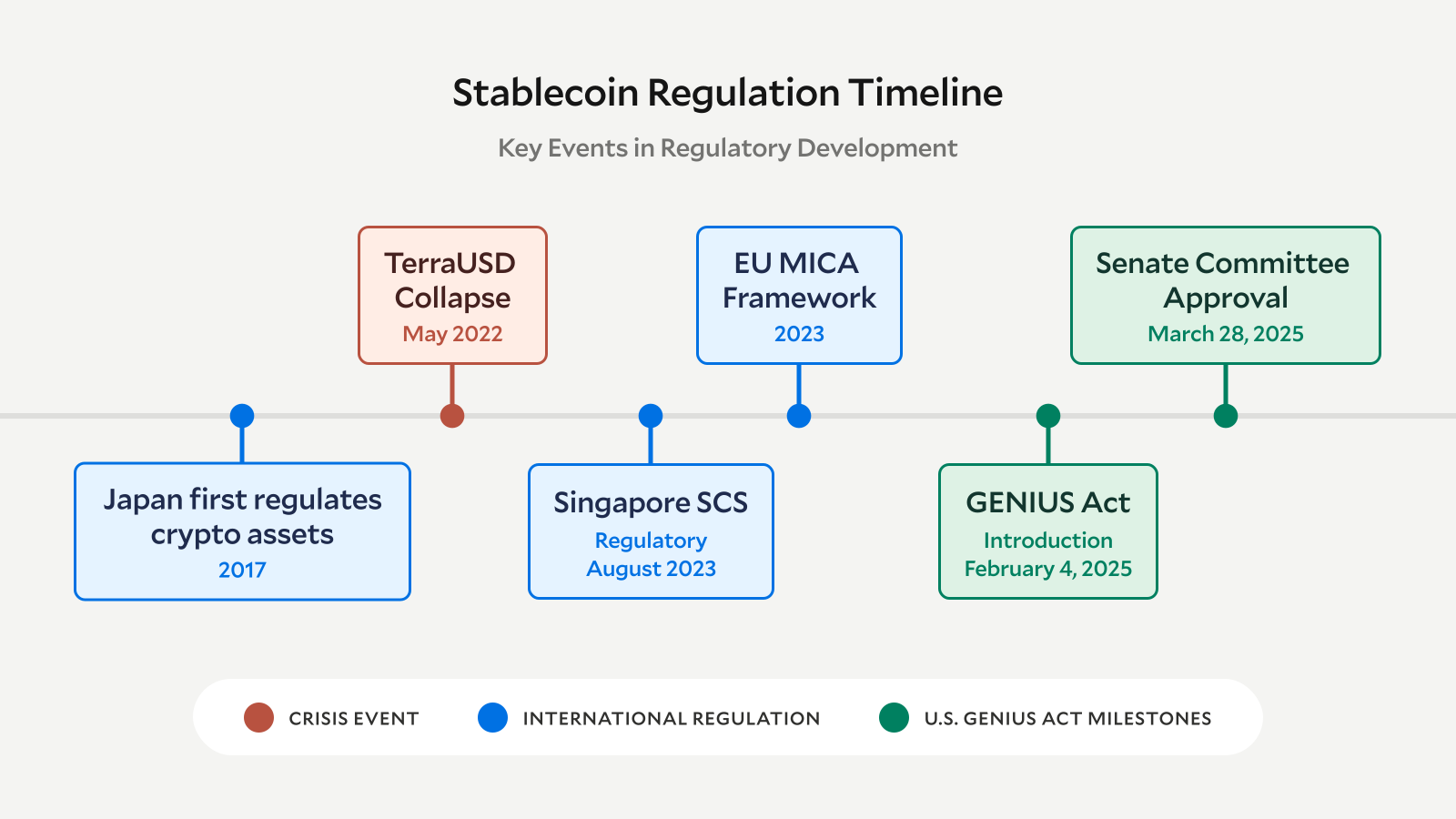
The Department of the Treasury published its proposed rule to implement the GENIUS Act. This rule outlines the requirements for stablecoin issuers, focusing on reserve assets and operational standards.

The OCC and NCUA released parallel proposed rules for bank and credit union permitted payment stablecoin issuers. These rules define eligibility criteria, capital requirements, and supervisory expectations for financial institutions entering the stablecoin market.

The public comment period for the NCUA’s proposed rule closes on April 13, 2026. Stakeholders can submit feedback on the regulatory framework through the Federal Register.
MiCA Implementation Status in the EU
The European Union’s Markets in Crypto-Assets (MiCA) regulation is fully implemented and operational, providing a working model for stablecoin oversight that contrasts with the United States’ proposed legislative stage. While the US GENIUS Act remains under consideration, MiCA has established a definitive regulatory baseline for Asset-Referenced Tokens (ARTs) and Electronic Money Tokens (EMTs). This operational framework requires issuers to maintain strict reserve backing and redemption rights, setting a standard that global issuers must navigate to operate across jurisdictions.
MiCA distinguishes between two primary categories of stablecoins. Electronic Money Tokens (EMTs) are pegged to a single fiat currency and must be fully backed by high-quality liquid assets held in reserve. Asset-Referenced Tokens (ARTs), which may be pegged to a basket of assets or commodities, face even stricter capital and governance requirements due to their complexity. Issuers seeking authorization under MiCA must demonstrate robust operational resilience, transparent reporting, and adequate governance structures to protect consumers and maintain financial stability.
For US-based issuers, the divergence between MiCA’s implemented rules and the US GENIUS Act’s proposed requirements creates a compliance challenge. The GENIUS Act, passed by Congress in July 2025, defines payment stablecoins and restricts issuance to regulated institutions such as banks and credit unions. However, because the US framework is still in the proposed rule stage, issuers operating globally must prepare for MiCA’s rigorous standards to ensure cross-border compatibility. The following comparison highlights the key differences in reserve composition and issuer eligibility between the two regimes.
| Feature | EU MiCA (Operational) | US GENIUS Act (Proposed) |
|---|---|---|
| Regulatory Status | Fully implemented and operational | Proposed legislation; rulemaking pending |
| Issuer Eligibility | Authorized crypto-asset service providers and credit institutions | Banks, credit unions, and regulated financial institutions |
| Reserve Backing | Full backing by high-quality liquid assets; strict segregation | 100% backing in cash and short-term US Treasury securities |
| Redemption Rights | Mandatory daily redemption at par value | Guaranteed redemption at par upon request |
| Governance Requirements | Detailed governance, risk management, and reporting obligations | Ongoing supervisory reporting and audit requirements |
Compliance steps for global stablecoin issuers
As MiCA fully enters its implementation phase and the U.S. GENIUS Act framework takes shape, stablecoin issuers face a complex dual-regulatory environment. Compliance is no longer a static checklist but an ongoing operational requirement. Issuers must align their technical infrastructure, reserve management, and reporting protocols with both European and American standards to maintain global liquidity and user trust.
The following steps outline the concrete actions issuers are taking to navigate these requirements in 2026.
Regulatory frameworks are still evolving through implementation guidelines. Issuers must actively monitor the Federal Register and the European Commission’s official journals for draft implementing acts. Engaging with public comment periods allows issuers to shape technical definitions around reserve assets and redemption rights before rules become final. This proactive stance helps avoid costly retrofits later.

MiCA requires high-quality liquid assets (HQLA) with strict haircuts, while the U.S. GENIUS Act focuses on payment stablecoins backed by cash and short-term U.S. treasuries. Issuers must segregate assets to ensure they meet the highest standard across jurisdictions. Regular internal audits should verify that reserve compositions do not exceed the allowable limits for riskier assets under either regime.

Technical compliance is a core pillar of both MiCA and emerging U.S. standards. Issuers must ensure their smart contracts undergo independent security audits at least annually, with results made publicly available. These reports must document vulnerability assessments, access controls, and upgrade mechanisms. Maintaining up-to-date audit trails demonstrates operational integrity to regulators and users alike.
Both MiCA and the GENIUS Act mandate transparent, real-time reporting of reserve data. Issuers must integrate automated reporting tools that can feed data to national competent authorities in the EU and U.S. federal regulators. This includes daily updates on reserve composition, transaction volumes, and redemption requests. Standardizing data formats across systems reduces the risk of reporting errors during regulatory inspections.
Navigating these steps requires a dedicated compliance team and robust internal controls. Issuers that treat regulation as a core operational feature rather than a legal hurdle will be better positioned to thrive in the 2026 stablecoin landscape.
Common questions about stablecoin regulation 2026
The path to final rules for both the EU’s MiCA framework and the US GENIUS Act involves specific procedural steps and jurisdictional boundaries. Understanding these mechanics helps clarify how issuers must adapt their operations.
[1] Proposed Rule - Federal Register, 2026 [2] Treasury Proposes Rule to Implement the GENIUS Act's Framework

No comments yet. Be the first to share your thoughts!