
The GENIUS Act framework explained
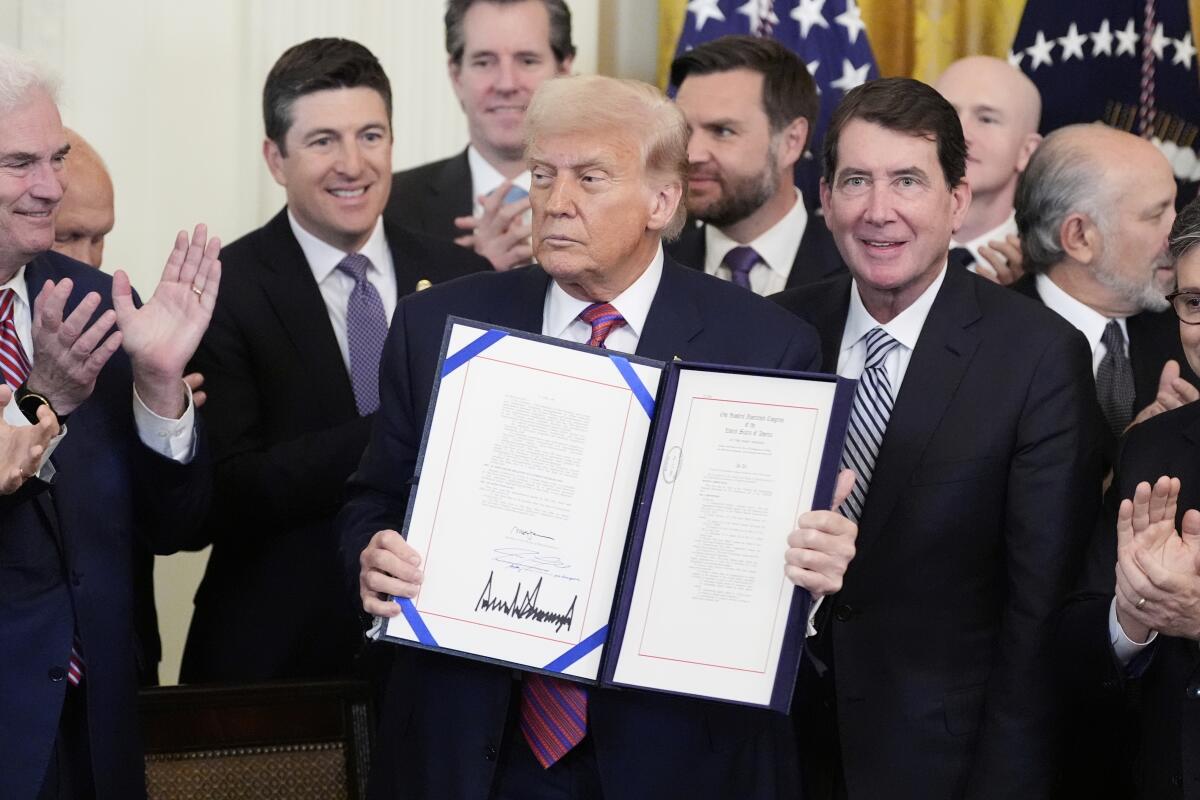
The GENIUS Act, enacted on July 18, 2025, establishes the first federal regulatory framework for payment stablecoins. It directs the U.S. Treasury to issue rules that define how these digital assets must operate, marking a shift from voluntary industry standards to binding federal mandates.
At its core, the law focuses on two pillars: reserve composition and issuer licensing. Payment stablecoins must be fully backed by high-quality liquid assets, such as U.S. Treasuries or cash deposits, to ensure they can meet redemption demands. This requirement aims to prevent the liquidity crises that have plagued the sector in the past.
Issuers of payment stablecoins must now obtain a federal charter or license. This oversight brings entities like USDC and USDT under the scrutiny of the Office of the Comptroller of the Currency (OCC) and other federal regulators. The goal is to create a level playing field where stablecoins function as reliable digital dollars rather than speculative instruments.
For market participants, this regulatory clarity introduces both compliance costs and stability benefits. Understanding the GENIUS Act’s requirements is essential for any entity planning to issue or hold payment stablecoins in the United States.
USDC and USDT Compliance Status
The 2026 regulatory landscape, anchored by the GENIUS Act, has forced the two dominant stablecoins, USDC and USDT, into distinct compliance pathways. While both issuers must now meet strict reserve and operational standards to serve U.S. persons, their historical structures dictate different adaptation strategies. Circle, the issuer of USDC, has aligned its governance with the new federal framework, while Tether, behind USDT, faces ongoing scrutiny regarding its reserve composition and transparency under the new rules.
Reserve Composition and Transparency
Under the GENIUS Act, stablecoin reserves must consist primarily of cash and short-duration U.S. Treasury securities. USDC has long adhered to a model favoring U.S. Treasuries and cash equivalents, making its transition to full compliance largely structural rather than fundamental. Monthly attestations by independent auditors provide a consistent view of these holdings. Tether, historically criticized for holding commercial paper and other assets, has shifted its reserve composition significantly toward U.S. Treasuries. However, critics and regulators continue to demand greater granularity in its reserve disclosures to ensure full alignment with the new federal standards.
Issuer Entities and Regulatory Alignment
The legal entities behind these stablecoins operate under different regulatory pressures. Circle is incorporated in the United States and maintains close coordination with federal agencies, including the OCC and Treasury. This domestic presence facilitates easier adherence to the GENIUS Act’s requirements for digital asset service providers. Tether Limited, incorporated in the British Virgin Islands, operates in a more complex jurisdictional environment. While it has established U.S. subsidiaries to manage compliance for American users, its offshore headquarters creates additional legal friction when interacting with U.S. regulators.
Comparison of Key Compliance Metrics
The following table outlines the primary differences in how USDC and USDT are positioning themselves to meet the 2026 regulatory standards. These distinctions highlight the varying degrees of integration with the U.S. financial system.
| Metric | USDC (Circle) | USDT (Tether) | 2026 Alignment |
|---|---|---|---|
| Primary Jurisdiction | United States | British Virgin Islands | USDC has structural advantage |
| Reserve Composition | U.S. Treasuries & Cash | U.S. Treasuries & Cash Equivalents | Both shifting to Treasuries |
| Regulatory Oversight | OCC / Treasury Coordination | Offshore / U.S. Subsidiary | USDC more integrated |
| Audit Frequency | Monthly Attestations | Monthly Attestations | Standardized under new rules |
| GENIUS Act Readiness | High | Moderate | USDC leading in compliance |
Market Data and Volatility
Regulatory clarity often stabilizes market perception, but price volatility remains a factor for traders. The following widget provides a live view of USDC’s price action against the U.S. dollar, reflecting market confidence in its compliance status.
The interplay between regulatory compliance and market trust is critical. As the 2026 rules take effect, the distinction between USDC’s domestic alignment and USDT’s offshore complexity will likely influence institutional adoption and retail preference.
RWA Tokenization and Stablecoin Clarity
Regulatory clarity for payment stablecoins is no longer just a compliance exercise; it is the foundational infrastructure for tokenizing real-world assets (RWAs). The distinction between speculative crypto assets and regulated financial instruments is sharpening, with the USDC and USDT ecosystems serving as the primary settlement rails for this shift. As the US Treasury, Federal Reserve, and OCC align on reserve requirements, the barrier to entry for institutional-grade tokenization has lowered significantly.
The tokenization of Treasury bills and private credit relies on the predictability of the underlying stablecoin. Investors require assurance that the digital dollar backing these assets is fully backed by short-term US Treasuries and cash equivalents, a standard now being codified into law. This regulatory certainty transforms stablecoins from speculative trading pairs into functional money market instruments, bridging traditional finance (TradFi) with decentralized finance (DeFi).
Market data reflects this structural pivot. The total stablecoin market capitalization has grown in tandem with RWA tokenization volumes, indicating that liquidity is flowing from speculative trading into yield-bearing real-world assets.
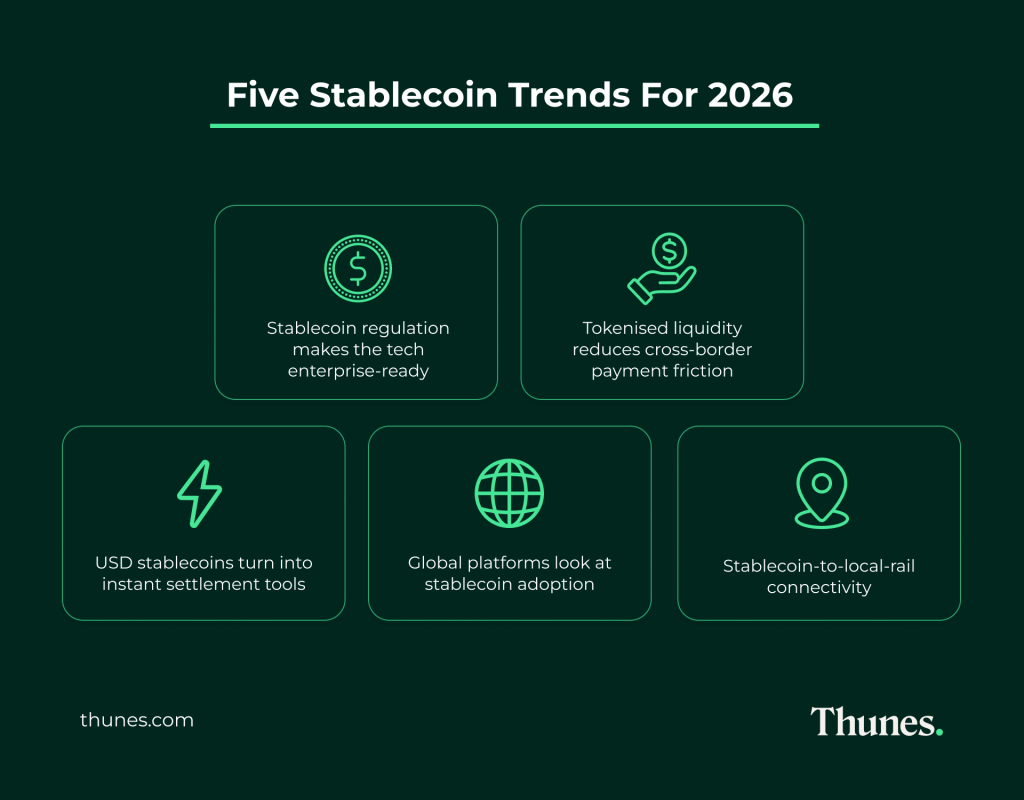
The integration of USDC and USDT into RWA protocols allows for 24/7 settlement of assets that were previously illiquid. Private credit funds, for example, can now tokenize loan portfolios, offering fractional ownership to a global investor base while maintaining regulatory compliance through stablecoin issuance. This trend is accelerating as global frameworks, such as the UK’s finalization efforts, mirror US standards, creating a cohesive international market for tokenized debt.
Market Growth Visualization
The following chart illustrates the correlation between stablecoin market cap expansion and the broader adoption of RWA tokenization. This data underscores the shift toward regulated, transparent settlement layers.
Cross-border payment implications
The passage of the GENIUS Act in July 2025 established a definitive regulatory framework for payment stablecoins, fundamentally altering the mechanics of international transfers. For cross-border payments, this legislation resolves longstanding ambiguities regarding reserve requirements and issuer liability, creating a standardized environment for high-volume settlements. The Federal Reserve’s analysis highlights that while stablecoins offer significant efficiency gains in speed and cost reduction for remittances, they introduce new complexities for monetary policy transmission. As global capital flows increasingly integrate with digital asset rails, the stability of these cross-border channels becomes a critical component of broader financial stability.
The Federal Reserve has explicitly noted the dual nature of stablecoin adoption in international markets. While the technology promises to streamline liquidity across borders, it requires rigorous oversight to prevent contagion risks from spilling into the traditional banking system. The central bank’s stance emphasizes that cross-border stability depends on the interoperability of regulatory standards between the U.S. and other major jurisdictions. Without harmonized rules, fragmented compliance regimes could create arbitrage opportunities that undermine the integrity of the global payment network.
"Payment stablecoins have the potential to improve the efficiency of cross-border payments, but their impact on monetary policy and financial stability requires careful monitoring and robust regulatory oversight to ensure that benefits do not come at the cost of systemic risk."
— Federal Reserve Board, Payment Stablecoins and Cross Border Payments (March 2026)
The technical architecture of these transactions also demands attention. Market participants must manage the volatility of underlying fiat reserves and the operational risks of blockchain interoperability. The Federal Reserve’s recent notes suggest that a coordinated approach among major central banks is essential to manage the liquidity shocks that can arise from sudden shifts in stablecoin demand across borders. This regulatory clarity is not merely a domestic concern; it is a prerequisite for the sustainable growth of the global digital economy.
Enterprise compliance checklist
Enterprises integrating stablecoins and RWA tokenization must navigate a fragmented regulatory landscape defined by the GENIUS Act and FDIC prudential standards. Compliance is no longer optional; it is a prerequisite for operational viability. The following checklist outlines the mandatory verification steps for businesses processing or holding stablecoin reserves.
- Verify Issuer Licensing: Confirm that all stablecoin issuers (USDC, USDT) are licensed and supervised entities. Only regulated issuers can process payments under the new framework.
- Audit Reserve Composition: Ensure reserves consist exclusively of cash and short-duration U.S. Treasuries. Commercial paper and other credit instruments are prohibited under the GENIUS Act.
- Implement FDIC-Compliant Safeguards: FDIC-supervised institutions must adhere to the proposed prudential framework for permitted payment stablecoin issuers, including strict capital and liquidity requirements.
- Establish Real-Time Transparency: Deploy systems that allow for daily attestation of reserve holdings. Third-party audits must be published without delay to maintain market confidence.
- Enforce RWA Tokenization Standards: Any real-world asset tokenized must have a clear legal basis for ownership and redemption. Ensure smart contracts include mechanisms for regulatory pauses if required by law.
Failure to adhere to these standards exposes enterprises to significant legal liability and operational shutdown. Prioritize official guidance from the Treasury, Fed, and FDIC when updating internal compliance protocols.

No comments yet. Be the first to share your thoughts!